
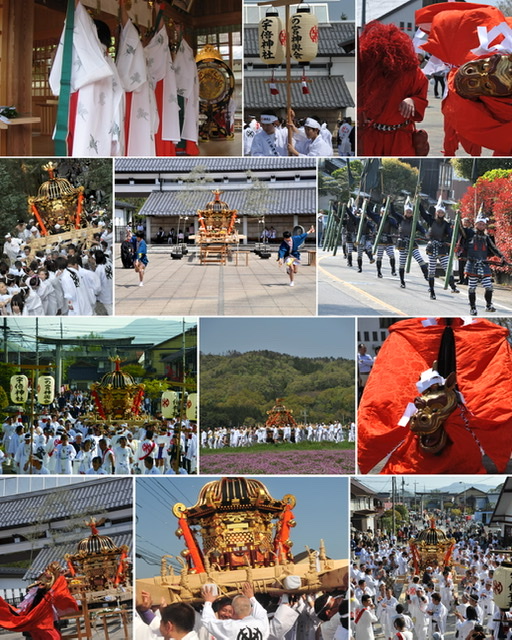


Ube Shrine’s Annual Festival 宇倍神社例大祭 うべじんじゃれいたいさい
Way Off the Beaten Path in Tottori Prefecture
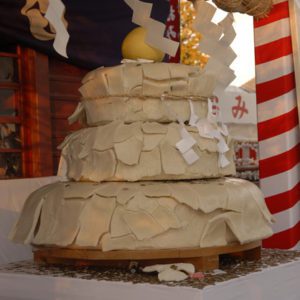
Ube Shrine’s annual festival is held on April 21st every year. This shrine was established in the year 648 and has appeared on a couple of printings of Japanese bank notes (paper money). The annual festival consists of a euphoric procession lead by the head priest, a lion dance (designated as an intangible folk cultural asset of the prefecture), the march of the warriors (this is from pre-samurai times) in full armour, followed by the dance of the maidens.Ube Shrine’s Annual Festival, known as 宇倍神社例大祭 (Ube Jinja Reitai-sai), is a vibrant traditional event held at Ube Shrine in Tottori Prefecture, Japan. It features ancient rituals with deep historical roots, drawing locals and visitors for its cultural performances.
Ube Shrine’s Annual Festival Dates
The main events span several days in mid-April, typically including a Sunday for the御幸祭 (Mikoshi procession). In 2026, the御幸祭 occurs today, April 19 (Sunday), with宵宮 (eve festival) on April 20 and the core例祭 (main festival) on April 21.
Key Highlights of Ube Shrine’s Annual Festival
Other rituals include浦安の舞 (peaceful dance) and草履取りの舞 (slipper-removal dance).
Historical Context
Ube Shrine, one of Inaba Province’s oldest (Heian period origins), is revered for business prosperity as the first shrine featured on Japanese banknote designs. The festival preserves因幡国府 traditions from Nara to Kamakura eras.
References
In English
http://www.torican.jp/english/famous-and-historical01/historical04
http://www.kansaimatsuri.com/en/matsuri/86/”>
https://www.kirinnomachi-japan-heritage.jp/en/reisai/
https://www.torican.jp/en/spot/detail_2816.html
https://www.sparkle.travel/en/place/827e7114-dc5c-11ee-9b39-c7c8948f11a7
https://exotericjapan.com/april-in-japan-%E5%9B%9B%E6%9C%88-holidays-and-events
In Japanese
https://www.ubejinja.or.jp/new-sampai/omatsuri/
https://www.pref.tottori.lg.jp/225295.htm
https://www.nihon-kankou.or.jp/tottori/312011/detail/31201ba2212059703
https://www.iwafu.com/jp/events/1066657
https://www.torican.jp/spot/detail_1031.html
https://www.ubejinja.or.jp/new-news/omatsuri/
https://ja.wikipedia.org/wiki/%E5%AE%87%E5%80%8D%E7%A5%9E%E7%A4%BE
https://shrineheritager.com/ube-shrine/
https://www.ubejinja.or.jp/new-news/336/
Photo thanks to UbeJinja.or.jp.
Related Events
Powered by Modern Events Calendar

![Exoteric Japan, After Dark, [God also roars] Dangling Goods Vibe for Women - Squirting Female Dildo Sex Toy for Women](https://exotericjapan.com/wp-content/uploads/2025/10/God-also-roars-Dangling-Goods-Vibe-for-Women-Squirting-Female-Dildo-Sex-Toy-for-Women-300x400.jpg)


